
Recently there have been headlines indicating that international students in F-1 nonimmigrant status will soon have to pay $100,000 to obtain optional practical training (OPT) work authorization. Here's what has been confirmed so far and what to look out for.
What is confirmed.
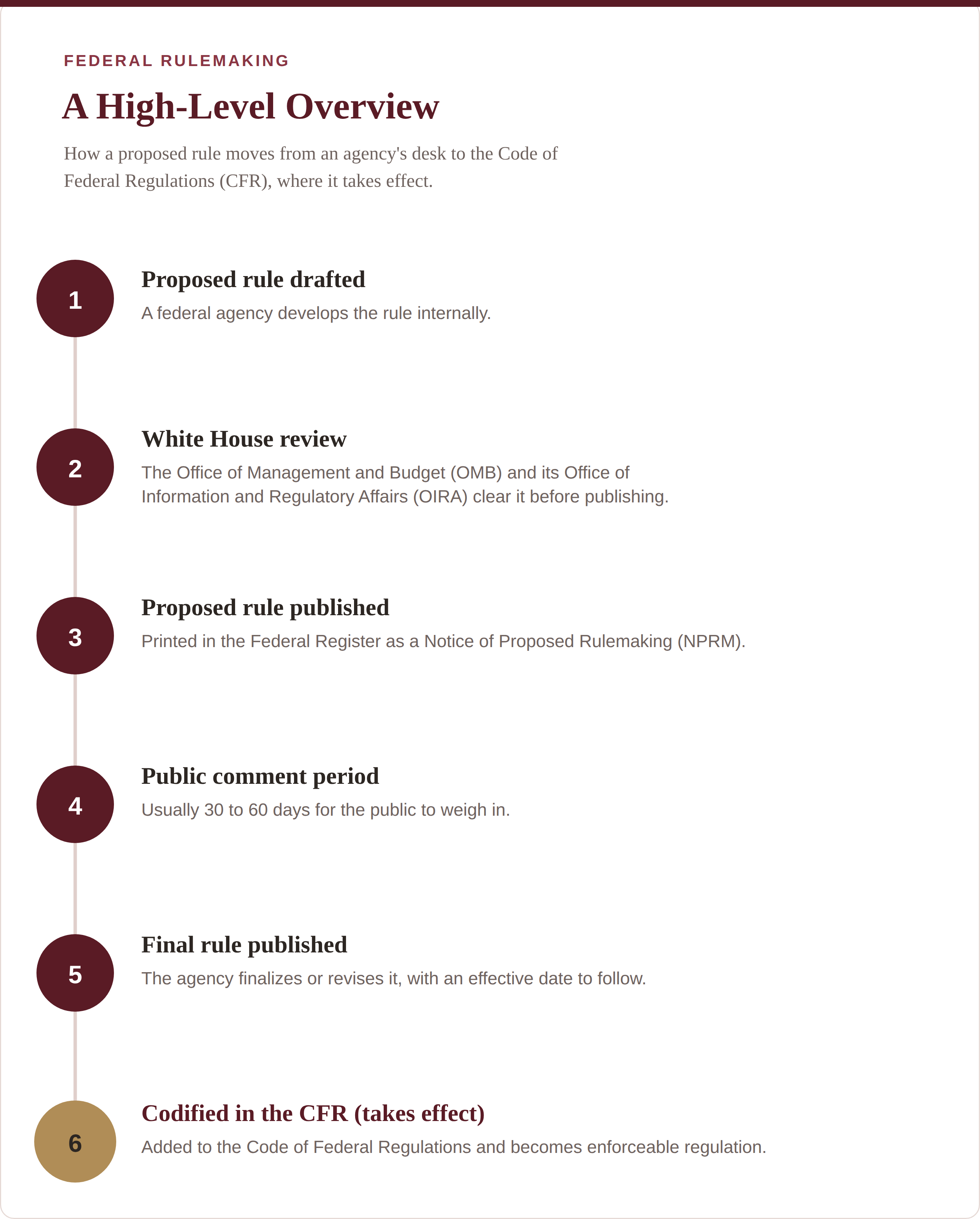
The Department of Homeland Security (DHS) has a proposed rule called "Optional Practical Training Fees" that just cleared the White House Office of Management and Budget (OMB) review on September 11, 2026. This generally means that publication of the proposed rule in the Federal Register is the next step. This is when stakeholders can take the time to digest the rule and further provide public comment on it. Usually the public comment period will open for 1 to 2 months. Once the comment period ends, the rule may either be finalized without any changes, finalized with changes based on the comments, or withdrawn. The fee amount in the final rule can be different from what is first proposed, because an agency can adjust a rule in response to the comments it receives. This means that it could be a few months, once the text of the rule has been published in the Federal Register, before the rule takes effect.
At a high level, OPT is what allows F-1 students to obtain work authorization to gain hands-on practical experience in their field either before or after finishing a degree, generally up to 12 months, plus an additional 24 months for STEM graduates.
What has not been confirmed as of today.
The "$100,000" fee, which has been widely circulated online, is based on news reports. The actual amount of the fees has not been confirmed at this time. Once the proposed rule has been published in the Federal Register we will have a clear picture of the actual fees.
As of today the rule has not been published, not finalized, and not in effect. Nobody pays anything additional today and current OPT and STEM OPT rules still apply. Who would pay (student, employer, or school), which students would be covered, any exemptions, and the start date are all still unknown and will depend on the actual rule.
This is separate from the H-1B Presidential Proclamation fee and the proposed H-1B cap-subject fee.
There are a few different U.S. immigration related fees in the news. One is the H-1B fee from a 2025 presidential proclamation, which USCIS has said does not apply to most F-1 students changing their status to H-1B from inside the U.S., and is currently not in place since it was struck down by a federal court. There is also a proposed $103,265 fee for H-1B cap-subject petitions. For more on this see my prior article here. This OPT fee proposal is distinct, and it would generally impact F-1 nonimmigrant visa holders earlier in their immigration journey in the U.S., at the initial OPT work-authorization stage either before, or right after, graduation.
What F-1 students can do now.
Keep in close contact with your university Designated School Official (DSO) and do not make a major decision, such as leaving your program of study, turning down a job opportunity, or rushing a premature filing, over a rule that does not exist yet. If you are eligible for OPT or STEM OPT it's important to know your timelines and keep your status in good standing. Keep an eye out for the published rule if and/or once it comes out. As mentioned above, there should be a public comment period where students, schools, and employers can weigh in. As always, if your situation is complicated, get individual advice rather than relying on headlines.